
Reading time: 5 minutes
In one of my blog posts, I stated that bias is a nasty bitch and this statement is still true! Not only does bias make apps fucking hard to create but it also gets in the way when proto-type personas are concerned.
For my master’s thesis, I will create personas and based on them I will give recommendations for a content strategy for a university website. As no user research is available, I decided to build proto-type personas. To do so, I organised an empathy mapping and user journey workshop. These provisional personas will then be the basis for user research and should be developed to proper personas.
Empathy Mapping
Empathy mapping is a tool that has been developed by Scott Matthews and was introduced by Gray, Brown and Macanufo (2010). It helps to quickly visualise thoughts, feelings, motivations, desires, and needs of the target group it is done for or “to go beyond a customer’s demographic characteristics and develop a better understanding of environment, behavior, concerns, and aspirations” as Osterwalder (2010) puts it. According to Babich (2018) it “helps product teams build a broader understanding of the ‘why’ behind user needs and wants”. They develop empathy for the users and thus, the focus is shifted towards the users’ requirements which eventually will increase the user experience.
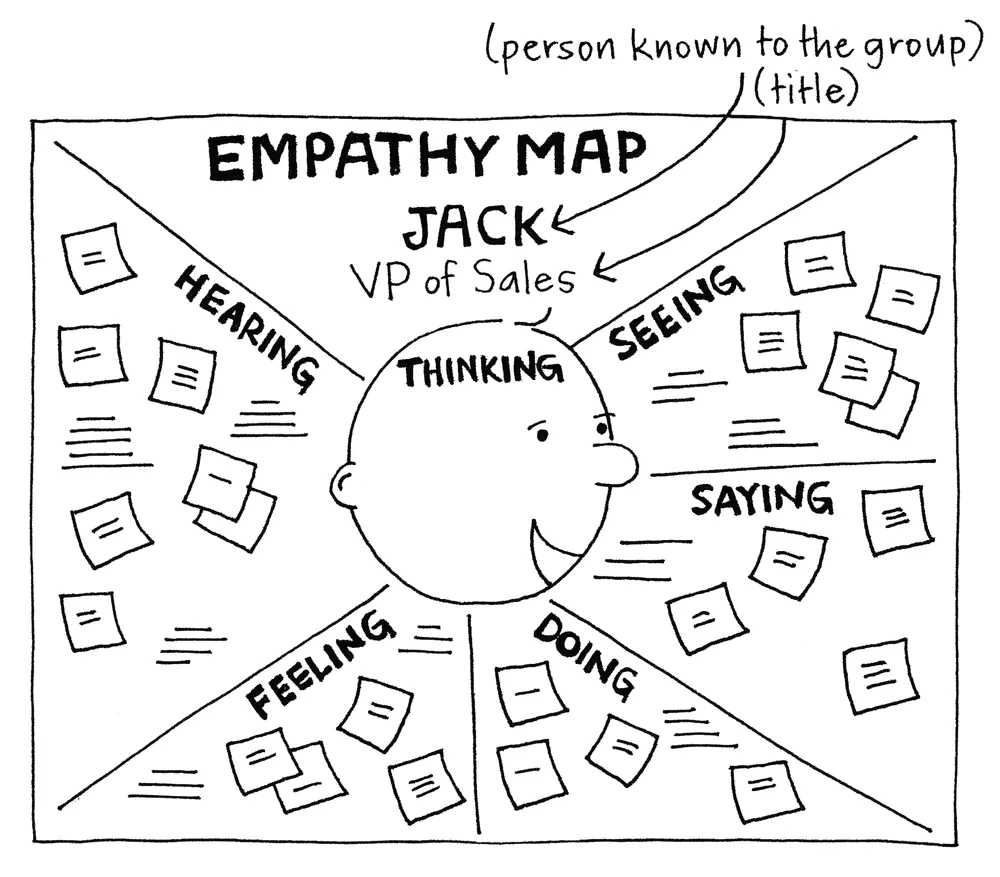
Gray et al (2010) recommend that this activity should last maximum 15 minutes per persona. In my opinion, it may be done in 15 minutes if the participants of an empathy mapping activity are well familiarised with the method (but I am still sceptical). Otherwise, it can be difficult to differentiate between the individual sections.
So, how does bitchy bias interfere in this process?
Whenever we think about the thoughts, feelings motivations, desires, and needs of the users, we do that based on our own thoughts, feelings motivations, desires, and needs. You see, that is where bias strikes again.
So, when I organised an empathy mapping (and user journey workshop) for my master’s thesis, bias hit me hard. Why? The participants came up with one proto-type persona that I do not like! I think that the guy is a lazy braggart. And I panicked because I knew that I have to work with this proto-type persona. What should I do? Well, basically, it is easy! Kick bias in the ass and do a professional job. Easier said than done. However, Mario (that’s how the participants called him) does not have to be my BFF, I just need to accept him to get along with him. And when digitalising the results of the workshop, I made peace with this proto-type persona. Actually, I am very thankful to the participants of the workshop that they created Mario because they gave me another opportunity to beat bias!
User Journey Mapping
Following the creation of the proto-type personas, user journey maps were created for them during the workshop. Kalbach (2016) explains that “customer journey maps illustrate the experiences of an individual as a customer of an organization. They typically include making a choice, such as the decision to buy a product or service, as well as to stay a loyal customer”.
It feels as if I have read approximately 5000 blog posts about user journey mapping and how to do it. The gist of these blog posts was that you should come up with your own criteria and that is what I did, I created my own template.
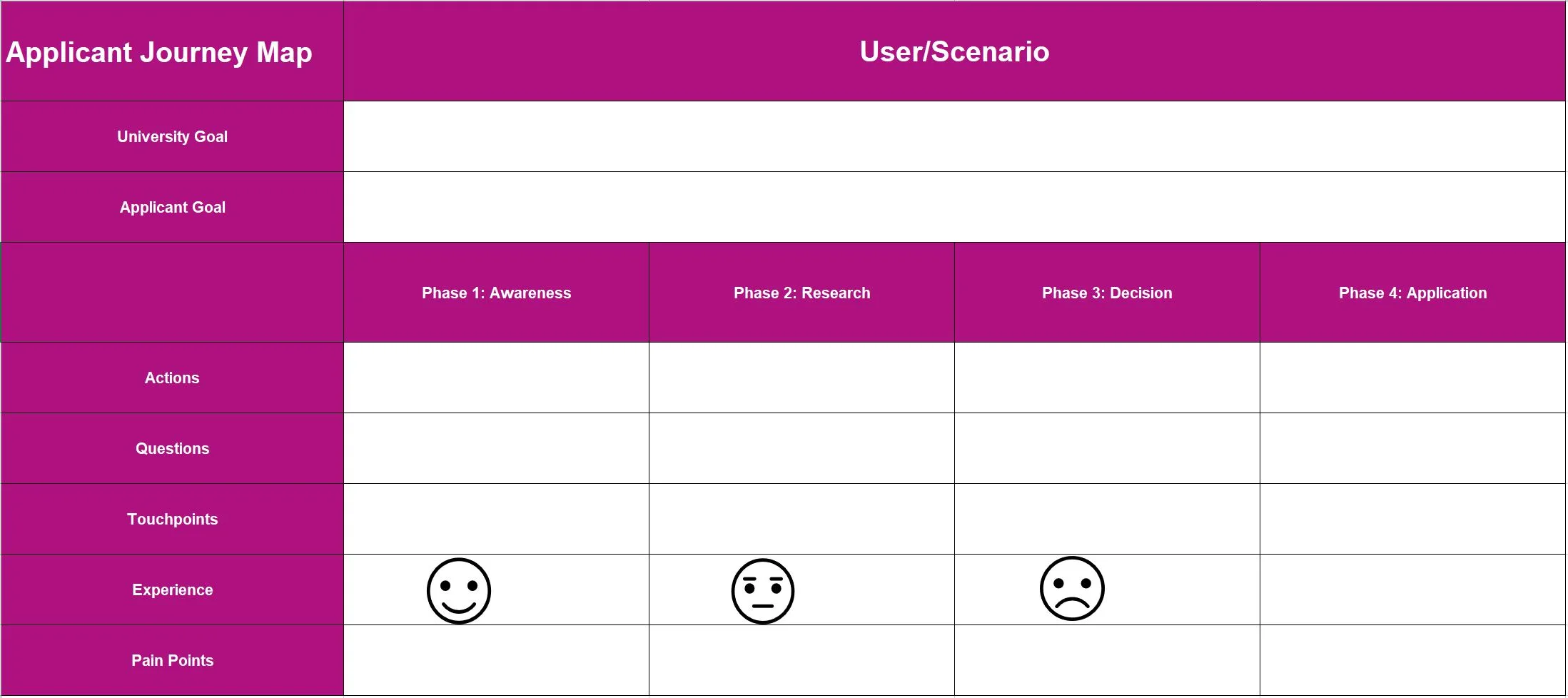
While the participants worked on these user journeys, I realised that it is much easier to step into the shoes of a user when you have made similar experiences. Moreover, I became aware again that bias always lurks behind the corner. Would I think like this? Would I see things like this? Would I act like this?
Stop! It does not matter what you think, see or do! Focus on the users because otherwise the product – whatever it may be – will not work. It is someone like Mario (whether you like him or not) who really counts (whether you like it or not).

Proto-Type Personas
Jacobs (2016) explains: “This type of persona should not be replacement for a proper persona study, but should be used in conjunction with one. ”
He explains: “Unlike the standard persona, proto-personas are based on the assumptions of the stakeholders, and further checked against actual data. They are a collection of heuristics, market research, and intuition presenting an opportunity to articulate the target audience, their needs, and behaviors. We rely on proto-personas to ensure alignment amongst our client stakeholders. They ultimately represent what we think our users are like.”
You see, as I rely on Mario I had to come to terms with him. This is all about him and the other proto-persona and not about me. However, Mario cannot be lazy any longer, he needs to develop to a proper persona.
Jacobs emphasises: “Although many masks are used to conceal and cloak, the UX Persona is intended to shed light on what users want in a product or service. Personas are a representation of the goals and behaviors of prospective users and they help guide our decisions and push the organization of the system we’re building to be as approachable as possible. A deep understanding of users is fundamental to creating a stellar product.“

Top 5 Learnings from the Workshop
- Bias is a bitch!
- You can kick bias in the ass.
- You need to kick bias (and yourself) in the ass.
- Creating (proto-type) personas is not about you.
- Mario is ok.

Top 5 Tips for Empathy and User Journey Mapping
- Never plan just 20 minutes for empathy mapping for two proto-type personas.
- Never plan just 25 minutes for user journey mapping for two proto-type personas.
- Plan a workshop for a whole day!
- Do not read about 5000 blog posts about user journey mapping.
- Embrace the (proto-type) personas even if you don’t like them.
Special Thanks
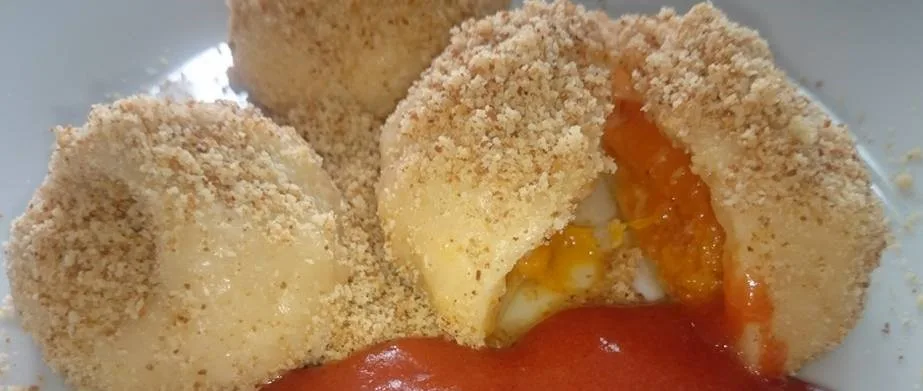
The workshop would not have been possible without my colleagues Yvi, Nina, Bernd and Magdalena and the head of the degree programme. I owe you Marillenknödel!

PS: I am still wondering if this has anything to do with Frankenstein…
PPS: Please check out the blog post about the COS17 personas by my colleague Alex. So if you are in need of courage and humor, you know whom to contact 😉
©Photos: Alexandra Wurian
Babich, N. (2018, September 2). 10 Tips to Develop Better Empathy Maps. [Web log post]. Retrieved from https://theblog.adobe.com/10-tips-develop-better-empathy-maps/
Gray, D., Brown, S. & Macanufo, J. (2010). Gamestorming. A Playbook for Innovators, Rulebreakers and Changemakers. Retrieved from https://learning.oreilly.com/library/view/gamestorming/9781449391195/
Jacobs, A. (2016). UX: Creating Proto-Personas. [Web log post]. Retrieved from https://uxdesign.cc/ux-creating-proto-personas-76a1738401a2
Kalbach, J. (2016). Mapping Experiences. Retrieved from https://learning.oreilly.com/library/view/mapping-experiences/9781491923528/
Osterwalder, A. (2010). Business Model Generation: A Handbook for Visionaries, Game Changers, and Challengers. Retrieved from https://learning.oreilly.com/library/view/business-model-generation/9780470876411/
Schreibe einen Kommentar